Community Partners Meeting
On June 4th, 2025, the Medway Community Forest Cooperative (MCFC) hosted our annual Community Partners Meeting — a chance to bring together the organizations and individuals we work with and serve.
This year we welcomed 25 participants from 13 organizations, including five first-time attendees:
Nova Scotia provincial and local government
The MCFC Board and staff
Parks Canada
Mersey Tobeatic Research Institute
Dalhousie University
Nova Scotia Community College
Freeman Lumber
LaHave River Salmon Association
Family Forest Network
Clean Annapolis River Project
Ecology Action Centre.
Sharing Stories and Perspectives
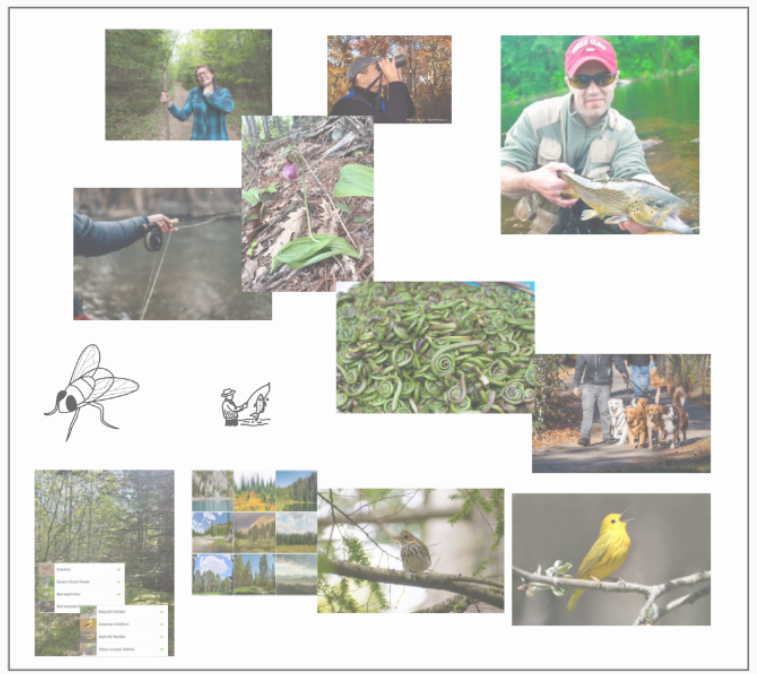
The meeting, held virtually, used a Mural board to make the session interactive and engaging. We began with a lighthearted activity: participants posted a photo representing their most recent time in the woods. Stories flowed about fishing trips, bird watching, fiddlehead foraging, and — of course, being June in Nova Scotia — encounters with black flies.
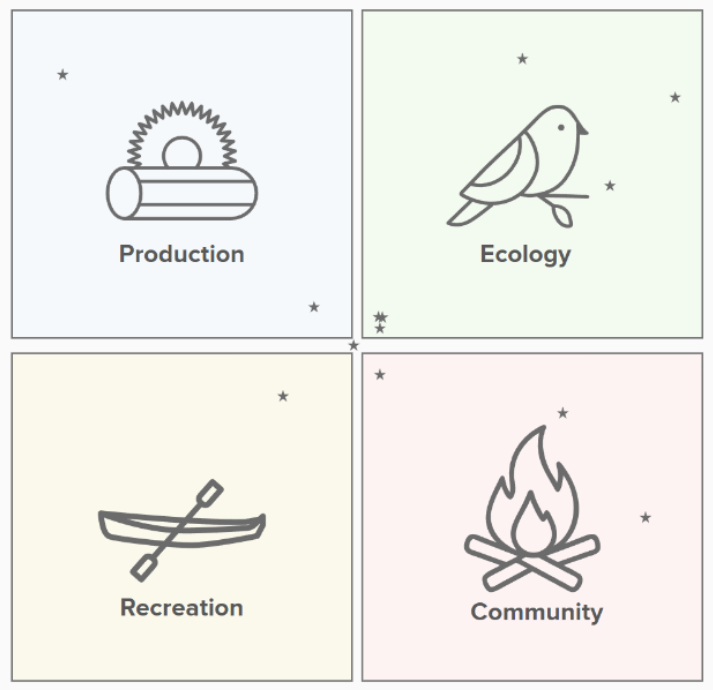
From there, attendees reflected on their place within MCFC’s “matrix of objectives”: balancing recreation, community, ecology, and industry. The responses highlighted the diverse mix of voices at the table, with a strong leaning toward ecological values. Most Participants came from ecological backgrounds and organizations, but we were elated to have voices from across the matrix of values.
Looking Back: 10 Years of Community Forestry
With MCFC now marking a decade of managing our license area, we asked our partners to reflect on where we’ve succeeded and where we can improve.
Successes identified included:
Leadership in fighting Hemlock Woolly Adelgid (HWA)
Our HWA program has more than doubled our treatment numbers each of the last 2 years, treating the equivalent of over 17,000 hemlock trees.
Promoting ecological forestry practices
Diversity of activities and partnerships
Strong forest management and research, including songbird studies
Ecological forestry practices have included single tree selection and restoration shelterwood harvests; we are focused on practicing best management activities for at risk species and biodiversity. Simultaneously we have undergone studies on biodiversity.
Community outreach and events
Including our yearly forest market and bird photography and fly fishing workshops.
Areas for growth:
Participants highlighted the challenge of becoming economically viable with current forestry markets. This is tied in part to not yet having a long-term lease. However, we anticipate signing a new agreement with DNR this year with a 10 year agreement, and are diversifying our revenue streams to ecotourism with our campground. There was also optimism that greater stability and maturing forests will bring new opportunities for revenue.
Looking Ahead: The Next 10 Years
We then turned to the future, asking participants what MCFC should prioritize over the next decade. Participants voted on each other’s ideas, helping us identify shared priorities for the years ahead.
Top suggestions included:
Demonstrating how harvesting can support multi-aged, multi-species forests in line with the Lahey Report’s ecological matrix vision
Tracking the success of climate-adaptive management strategies
Serving as a model for new community forests across Nova Scotia
Conducting research, including harvest treatment trials
Expanding recreation opportunities through new trails
Continuing to teach and promote tree marking
Moving Forward
The meeting concluded with a discussion of concrete next steps, actions, and partnerships. We left the session feeling grateful for the collaboration of our partners, proud of our accomplishments over the past decade, and excited for the future.
This year alone, MCFC will:
Launch new research projects on the impacts of ecological forestry on canopy cover, forest connectivity, and habitat retention
Open a new backcountry-style campground
Host the return of our annual Forest Market
Continue building strong partnerships and community engagement opportunities
We are committed to being responsible stewards of forests in Kespukwik, to pioneering ecological and community forestry in Nova Scotia, and to showing how forests can be shared to meet ecological, cultural, and economic needs.
